| Botanical Name | Gmelina philippensis |
| Family | Lamiaceae |
| Genus | Gmelina |
| Specie | philippensis |
| Common Name | Parrot's Beak |
| Life Cycle | perennial vine |
| Fragrant or Not | NO |
| Category(Bush/Vine/Tree) | VINE/Shrub |
| Height | 10-12 ft. |
| Spacing | 12-15 ft. |
| Flowering Months | moonsoon |
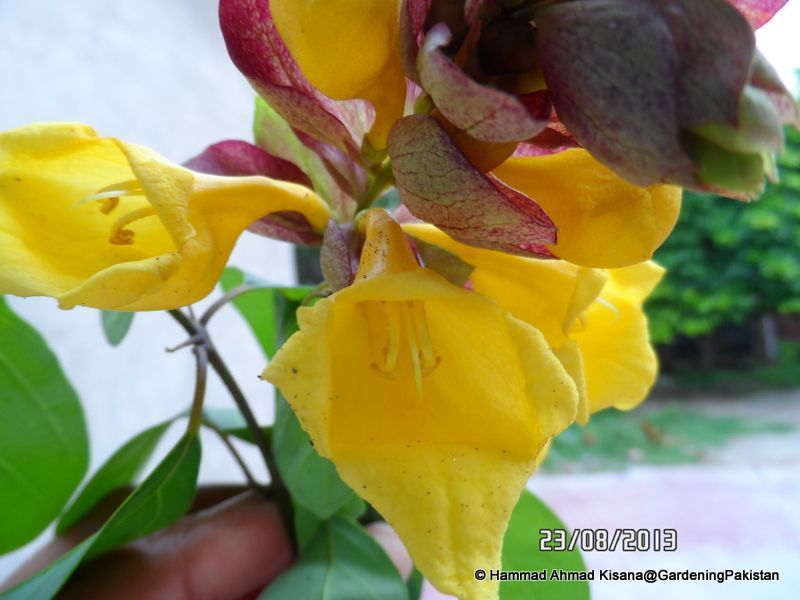
| Flower Color | Bright Yellow |
| Growing Areas | All Pakistan |
| Frost Tender | yes |
| Exposure | full sun |
| Soil pH | tolerant |
| Propagation | From woody stem cuttings From seed |
| Uses | ornamental vine /shrub,Fruit extract is medicinal and is used to treat athlete’s foot and various other complications; Pounded with lime it can be applied as a poultice to the throat for coughs. |
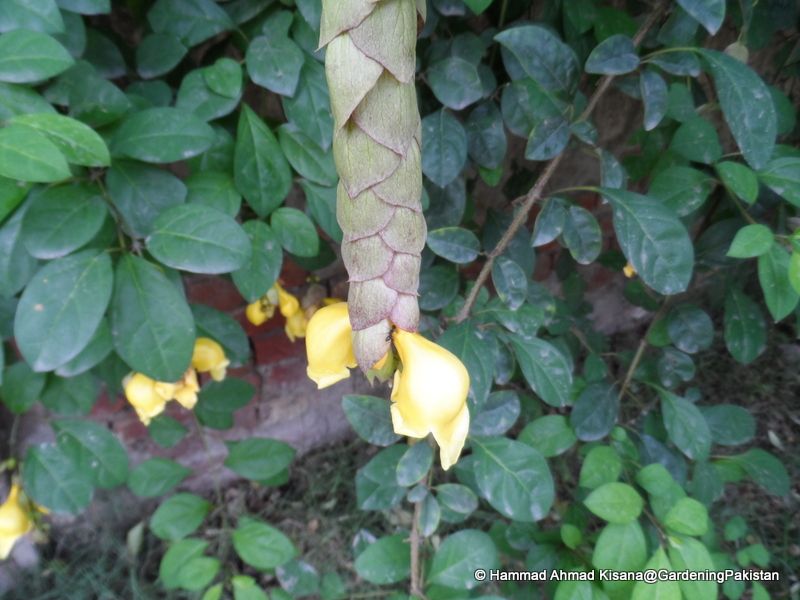
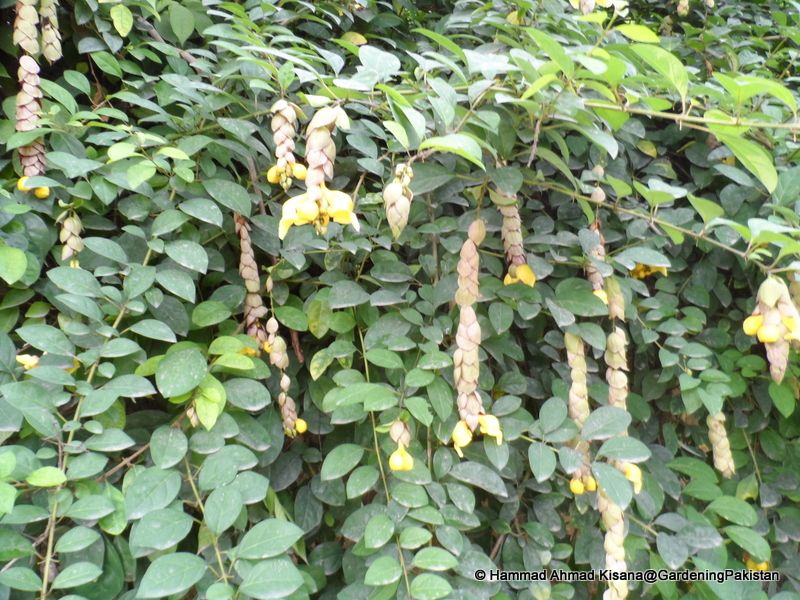
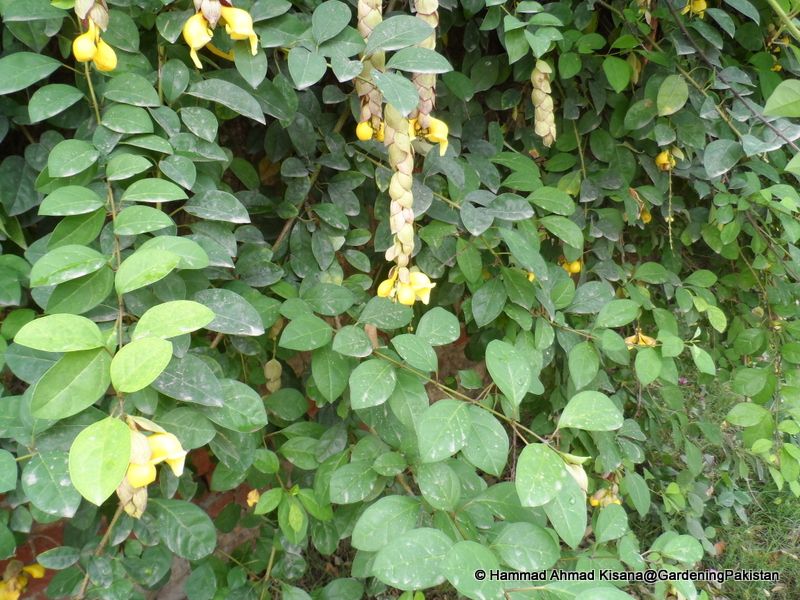
| Other Details | An extraordinary round shrub with pendant branches, large long leaves and exotic flowers comprised of yellow blossoms which emerge at the end of a tube-like structure of overlapping bracts. The flower resembles parrot's beak. Large yellow pod contains 1 seed.Gmelina, pronounced with a silent G, is a sprawling thorny shrub growing up to 10 to 15 feet. Leaves vary from a oval to ivy or ‘duck foot’ shape. It produces yellow flowers from a long, up to 10 inch, tube shaped structure comprised of overlapping bracts. It is said to resemble a parrot’s beak. The flower pod has one seed in the end. It also produces a 2cm smooth, pear-shaped fruit.Gmelina is proving to be one of the more popular species for tropical bonsai. Its fast growth and development make it easy to progress your design in a short time. Branches wire easily and are very flexible when they emerge. Leaves reduce very well from a natural size of up to 4 inches to less than ½ an inch as bonsai. This is a favorite species for shohin enthusiasts. It rarely blooms as a bonsai as the flower usually emerges at the end of leggy growth. The small glossy leaves however are reason enough to grow this species. It will form a dense crown with repeated pruning. The bark will become rough and fissured with age. |