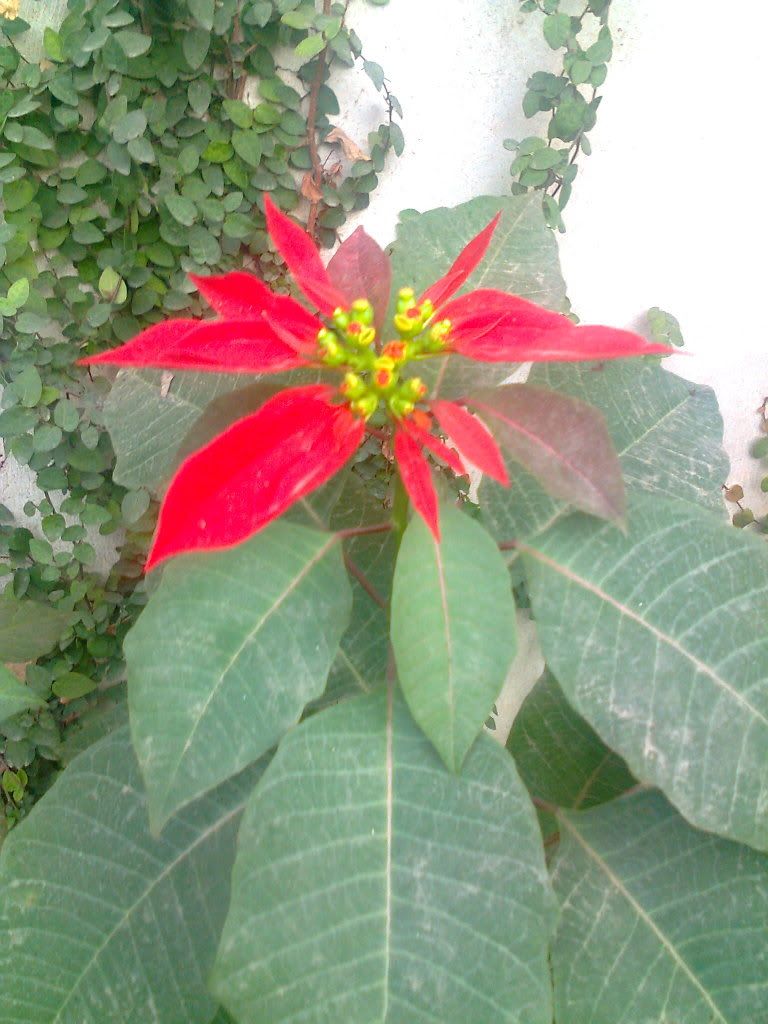
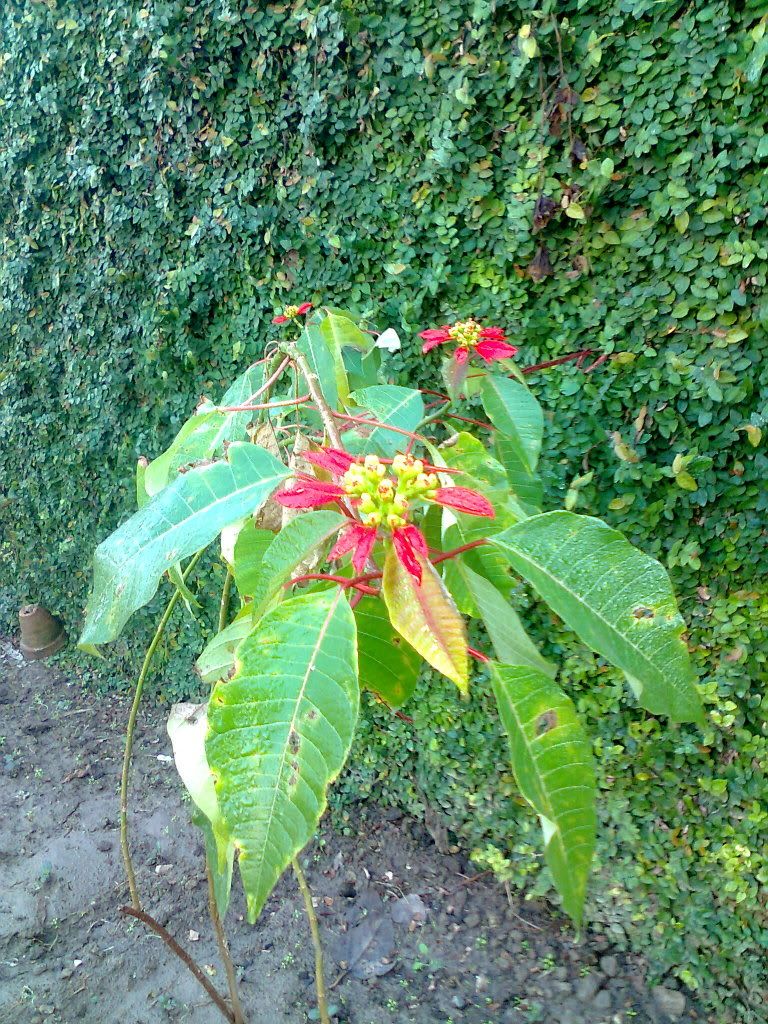
| Botanical Name | Euphorbia pulcherrima |
| Family | Euphorbiaceae |
| Genus | Euphorbia |
| Specie | E. pulcherrima |
| Local Name in Urdu | |
| Common Name | Poinsettia |
| Life Cycle | Tropicals and Tender Perennials |
| Cultivar Name | |
| Fragrant or Not | No |
| Category(Bush/Vine/Tree) | Small shrub |
| Height | 0.6 to 4 m (2 to 16 ft) |
| Spacing | 3 to 7 feet |
| Flowering Months | winter |
| Flower Color | red |
| Growing Areas | All Pakistan |
| Frost Tender | yes |
| Exposure | Sun: Part shade |
| Soil pH | tolerent |
| Propagation | From herbaceous stem cuttings |
| Uses | ornamental plant |
| Other Details | Euphorbia pulcherrima is a shrub or small tree, typically reaching a height of 0.6 to 4 m (2 to 16 ft). The plant bears dark green dentate leaves that measure 7 to 16 cm (3 to 6 inches) in length. The colored bracts—which are most often flaming red but can be orange, pale green, cream, pink, white or marbled—are often mistaken for flower petals because of their groupings and colors, but are actually leaves. The colors of the bracts are created through photoperiodism, meaning that they require darkness (12 hours at a time for at least 5 days in a row) to change color. At the same time, the plants require abundant light during the day for the brightest color. The flowers of the poinsettia are unassuming and do not attract pollinators. They are grouped within small yellow structures found in the center of each leaf bunch, and are called cyathia.Poinsettia plants are extremely brittle. Handle with care so as not to snap branches. Place your plant in a bright area away from all cold air.Poinsettia plants like to be kept on the dry side. Water as often as needed, but allow soil surface to dry before watering again, then soak the soil. Be certain all excess water is drained away and discarded. Fertilizer is not necessary |